Opatija: The Lady of the Camellias
Date
Reading time
5 min


Between lush old parks and the blue horizon, Opatija as the Lady of Kvarner offers the most beautiful version of nautical luxury: the lightness of being so close to the sea
Opatija did not become an elegant tourist destination overnight; it has been building that identity for almost two centuries. Its cityscape is not defined by walls and a stone-built historic core, but by historic hotels, villas, parks and a promenade tracing the coastline of Kvarner. It is precisely here that Central European architecture, Mediterranean vegetation and a culture of leisure come together to create an identity that sets Opatija apart from other Croatian destinations.
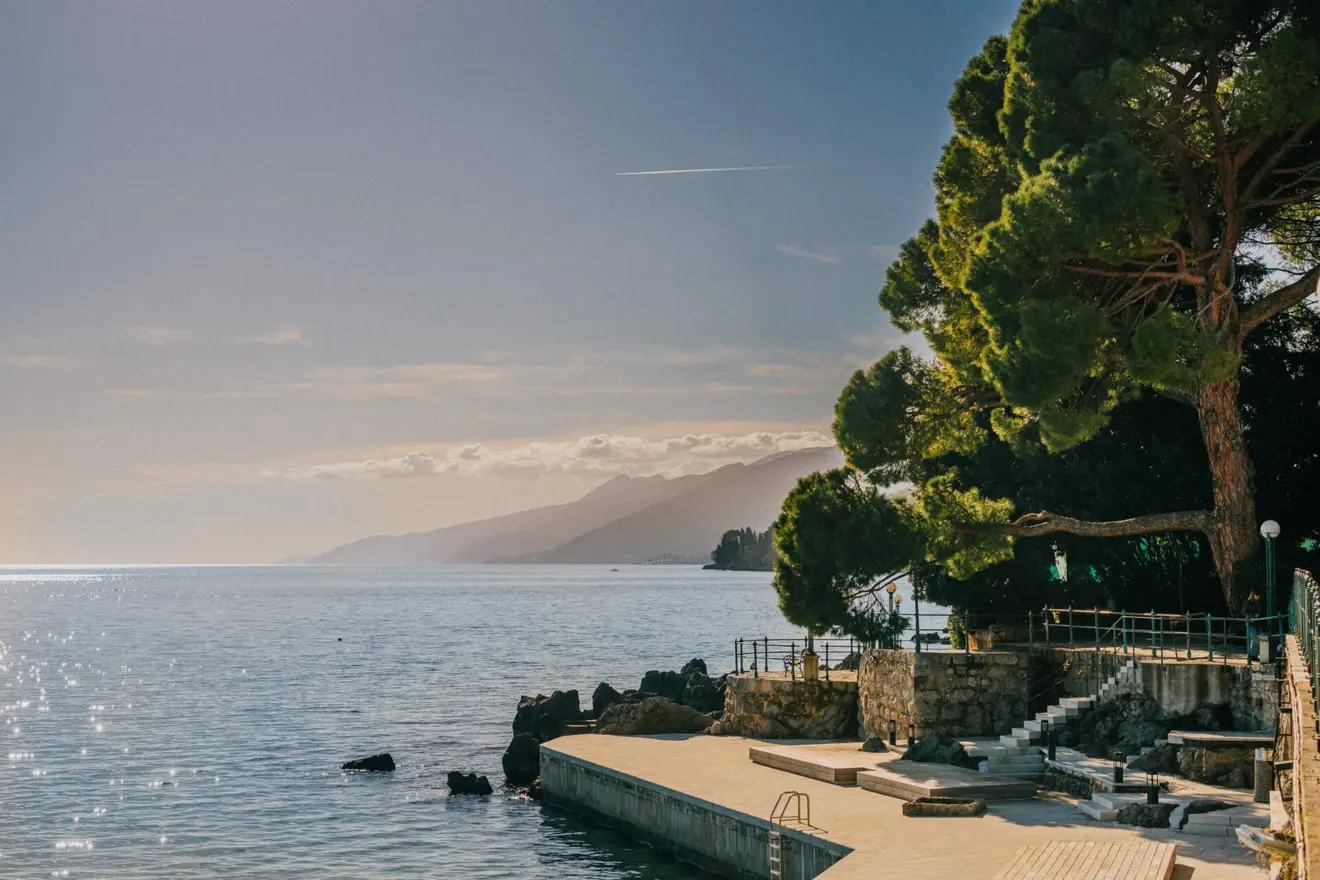
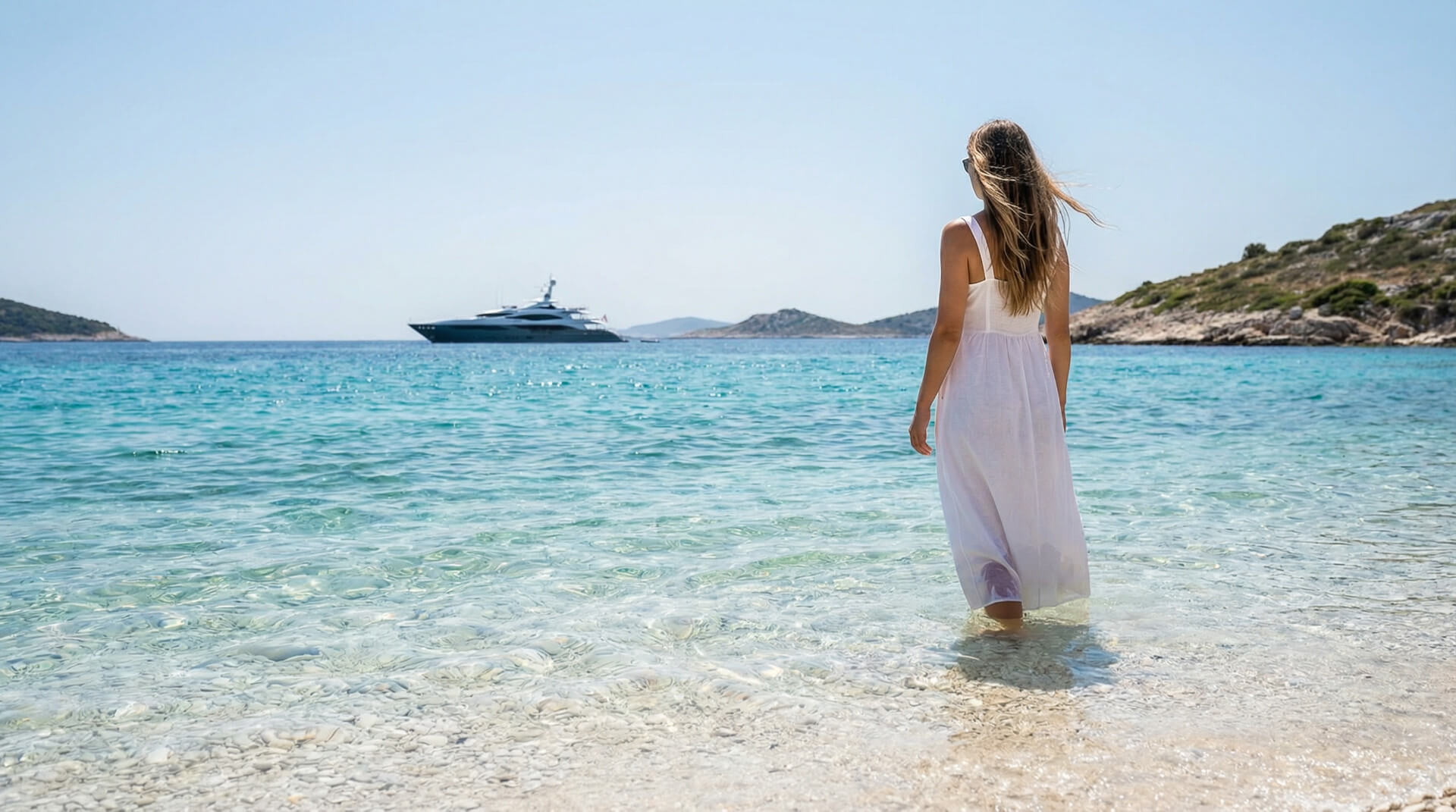
For yachting guests, Opatija is more than a place to provision or make a brief stop. Time spent on board naturally extends into wellness, dinner by the sea, a cultural programme or a walk along the Lungomare. The town is compact enough to explore in a day, yet offers enough to make your stay an easy choice.
Opatija for yachting guests
The main nautical point of arrival is ACI Marina Opatija in Ičići, close to the town centre. From the marina, you can continue to Opatija by road or, along the Lungomare, a seaside promenade lined with beaches, hotel terraces, parks and villas for which the area is known. Its position at the centre of the approximately 30-kilometre-long Riviera makes the town a nice stop on longer routes towards Krk, Cres and Lošinj. Opatija can be the starting or finishing point, but also an urban interlude.
The development of modern Opatija began with Villa Angiolina, built in 1844 by the Rijeka nobleman Iginio Scarpa. The villa and its gardens soon attracted distinguished guests, and in 1884 Hotel Kvarner opened as the first hotel on the eastern coast of the Adriatic. Just a few years later, in 1889, Opatija was declared an imperial climatic health resort. Even today, history is far more than a backdrop. It can be read in hotel façades, parks, cafés and in the habit of spending time at a slower pace.
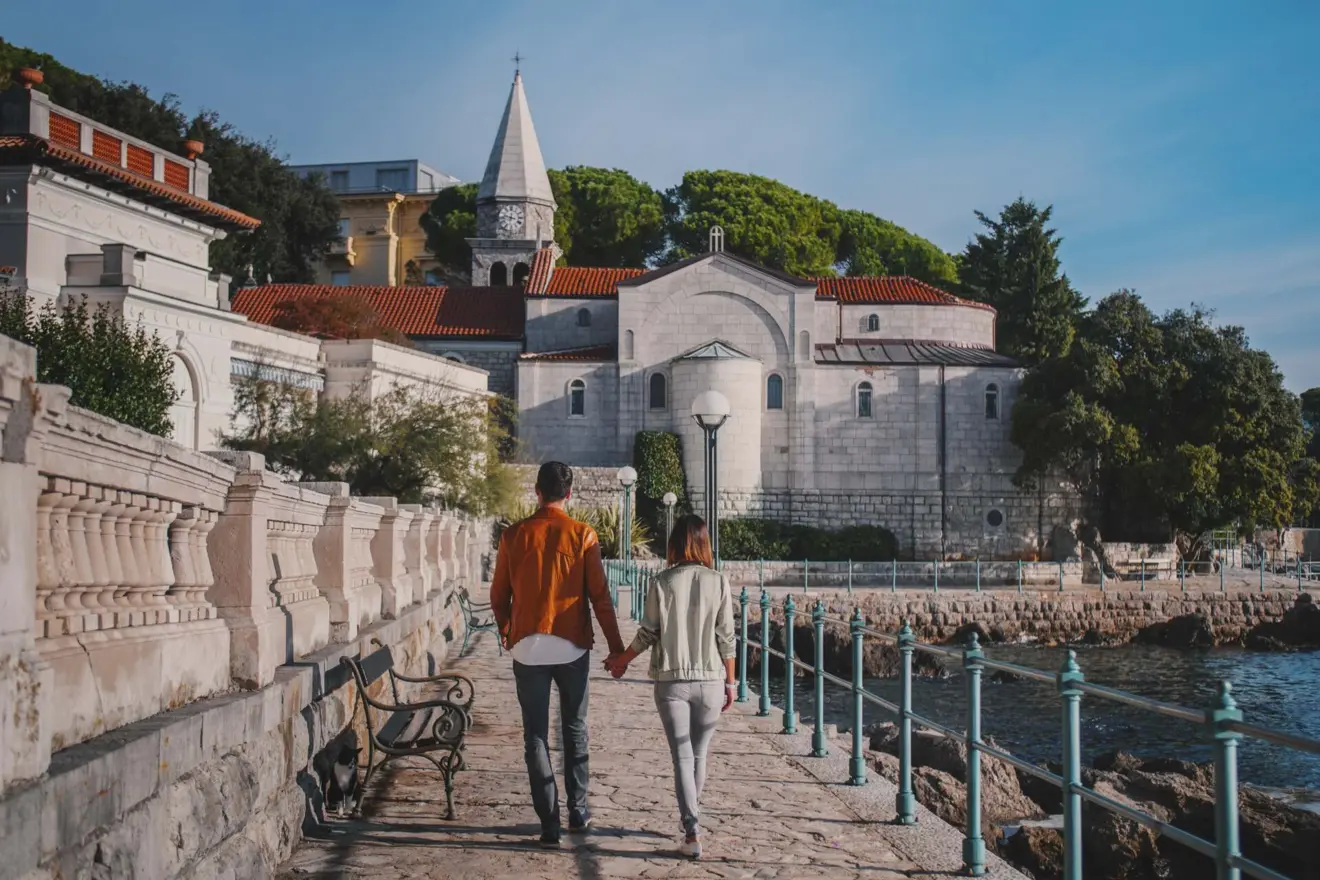
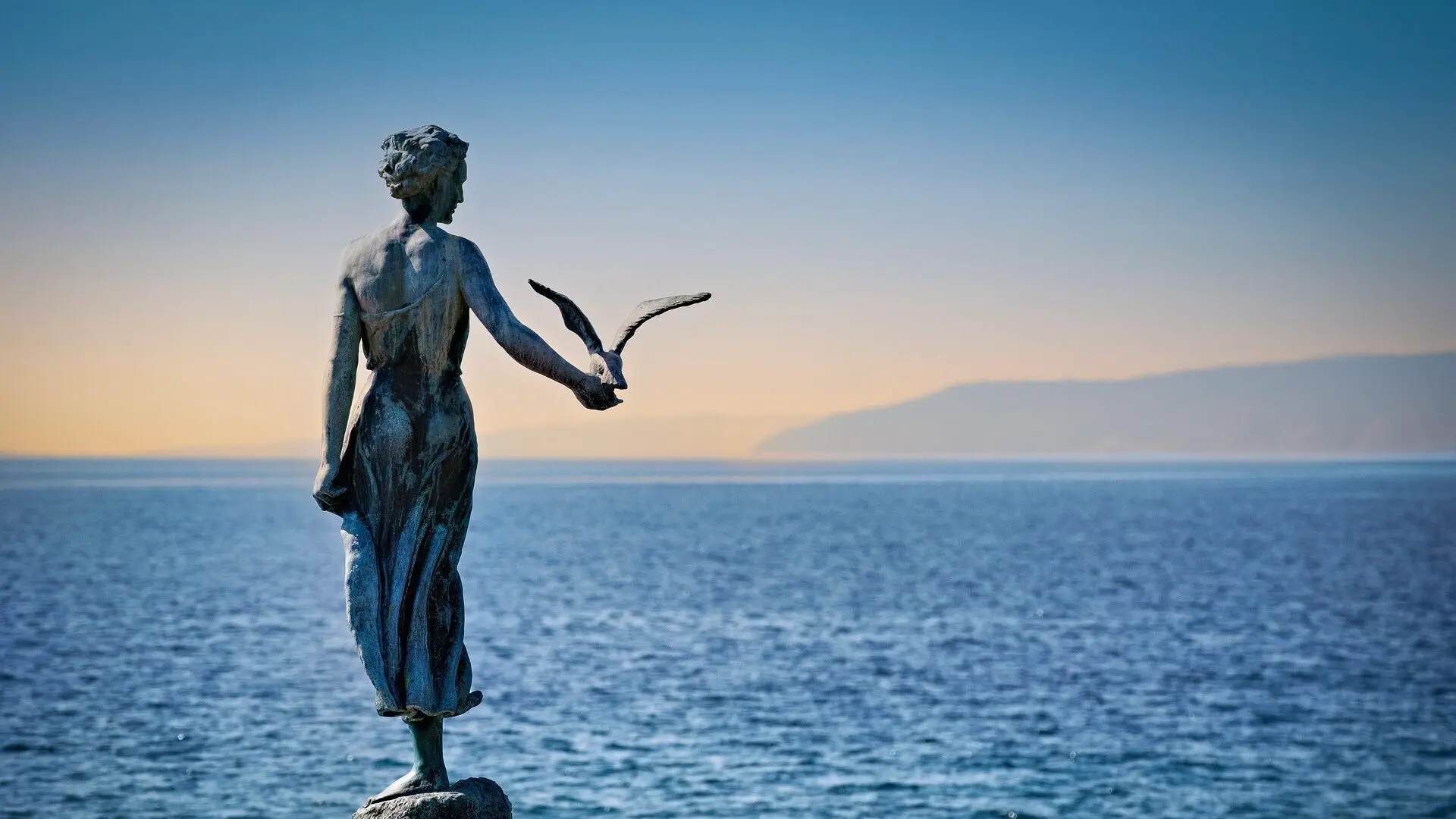
The Franz Joseph I Coastal Promenade, known as the Lungomare, stretches for ten kilometres from Volosko through Opatija to Ičići and Lovran. Along the route, villas, parks, bathing areas, small coves and city landmarks alternate, including the Maiden with the Seagull, a sculpture by Zvonko Car positioned on a rock by the sea. The central section of Lungomare alone reveals what matters most: the architecture, the relationship between the town and the sea, and the atmosphere that allows Opatija to retain the character of a grand seaside resort to this day.
Historic villas, parks and hotels
Villa Angiolina and the park that shares its name remain key places for understanding the history of tourism in Opatija. The park is known for its rich vegetation, and the camellia, one of the plants introduced from different parts of the world, has become a symbol of the town. Park St. James and the American Gardens are also worth visiting, with the latter offering a different perspective over Opatija and Kvarner Bay from its elevated position.
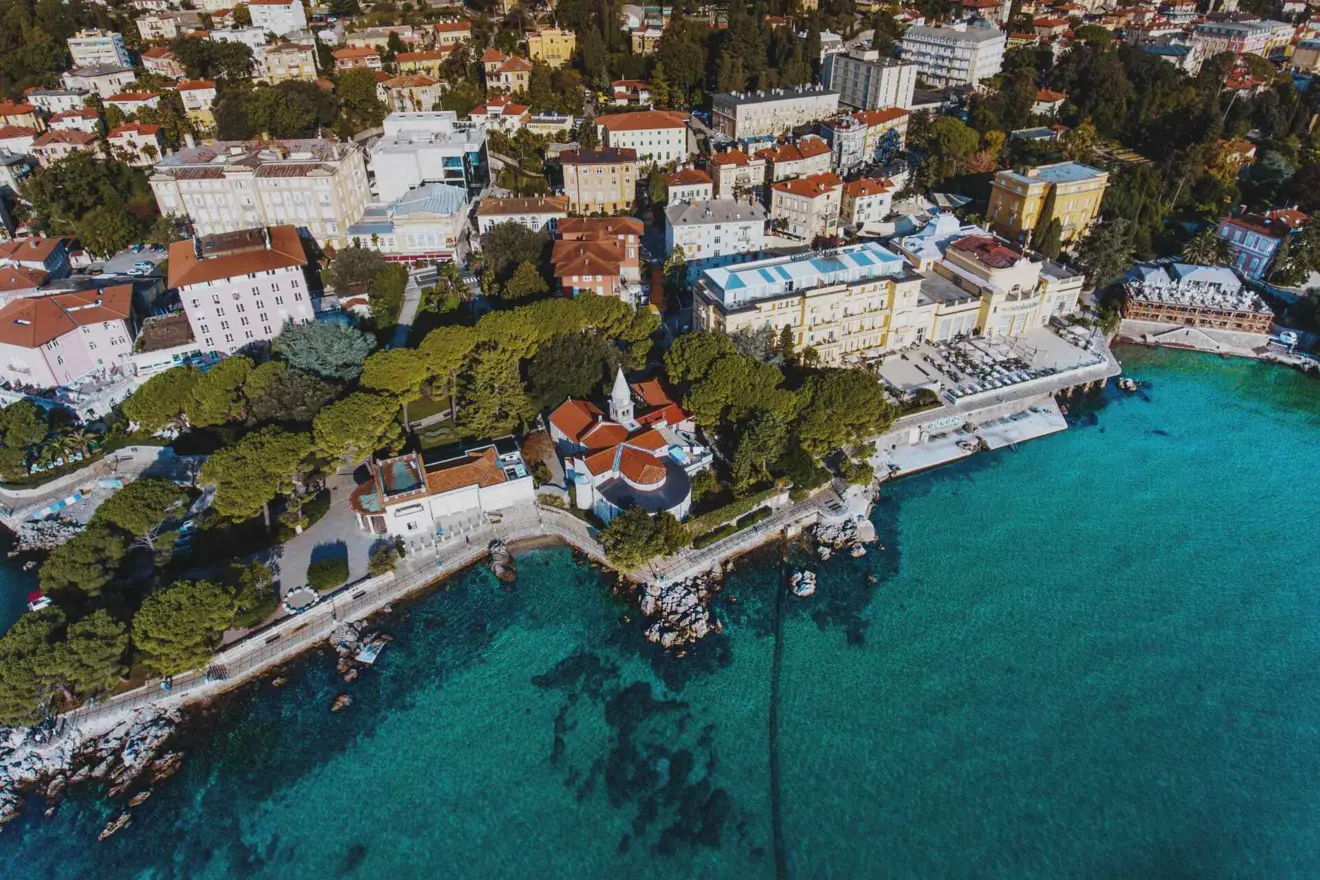
The hotel tradition continues at the intersection of historic heritage and contemporary design. Hotel Kvarner and Milenij preserve a more classical Opatija character, while hotels such as Navis and Bevanda offer a more contemporary interpretation of luxury directly by the sea. Navis stands out for its private access to the sea and berths for yachts and sailing boats of up to 30 metres.
Volosko: The gastronomic end of Lungomare
At the western end of the promenade lies Volosko, a former fishing village that has retained its small harbour, stone houses and a more intimate atmosphere than central Opatija. Early evening is the ideal time to arrive, when a walk can end with dinner by the harbour.
Among the best-known addresses is Plavi podrum, the oldest restaurant on the Opatija Riviera, while Valle Losca combines rustic and coastal influences. A little farther away, towards Preluk, the restaurant at Navis bases its menu on fish, crustaceans, shellfish and seafood.
Kvarner cuisine also has a distinctive signature of its own. Scampi, fresh fish and shellfish meet homemade pasta, meat from the hinterland and Central European pastry influences, making Opatija one of the more interesting gastronomic stops in the northern Adriatic.
Wellness, Učka and culture above the sea
Opatija was a wellness destination long before the concept became part of the vocabulary of contemporary hotels. Its climate, air, parks and proximity to Učka have for centuries attracted guests who came to Kvarner for rest and recuperation. Today, that tradition is continued by spas, the Thalasso Wellness Centre and specialised health and wellness institutions.
This is a simple way to change pace after several days at sea without moving far from the coast. The day can begin with a treatment or workout, continue with lunch and a walk, and end with a return to the deck.
Immediately inland lies Učka Nature Park. Vojak, the highest peak of Učka and the Istrian Peninsula, offers a landscape entirely different from the one by the sea, while the Poklon Visitor Centre presents the natural, cultural and historical features of the area.
Cultural attractions also remain close to the coastline. The Open Air Theatre in Angiolina Park hosts concerts, musicals and other programmes, while the Croatian Museum of Tourism, the Juraj Šporer Art Pavilion and the Swiss House can easily be incorporated into exploring the town.
Opatija throughout the year
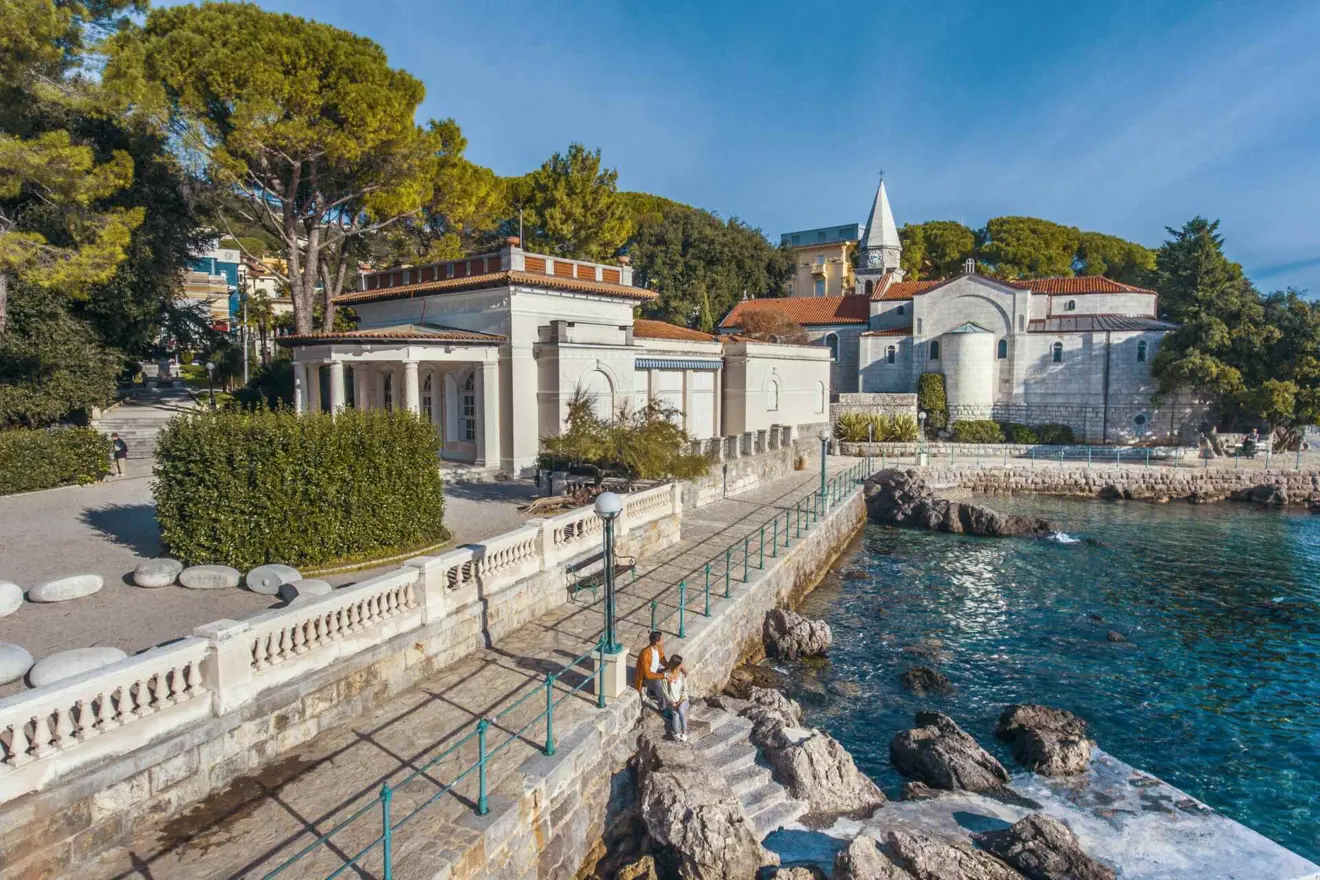
Late spring and early autumn are particularly pleasant, bringing fewer crowds, comfortable temperatures and plenty of time for walks and relaxing on outdoor terraces. In summer, the town is livelier, with more events and a stronger atmosphere, while in winter the focus shifts towards wellnes and gastronomy.
Opatija therefore does not build its appeal around a single landmark. Its strength lies in the whole, in the way the marina, the Lungomare, parks, hotels, restaurants and the sea flow naturally into one another. It offers a change of pace without completely moving from the sea. That is precisely its own particular kind of nautical luxury. Not ostentatious extravagance, but the ease with which almost everything is accessible along the coast.
TEXT Marija Vuković
PHOTOS TZ Opatija, Shutterstock & Adobe Stock, Pixabay, Unsplash